Most people think of breathing as automatic — and most of the time it is. But the pattern can shift gradually through posture, stress, habit, or pain, and once it does, the downstream effects on the musculoskeletal system and nervous system are well‑documented.
This course covers the physiology behind dysfunctional breathing, the research connecting it to neck, shoulder and back pain, and a practical four‑to‑eight‑week retraining protocol you can work through at home.
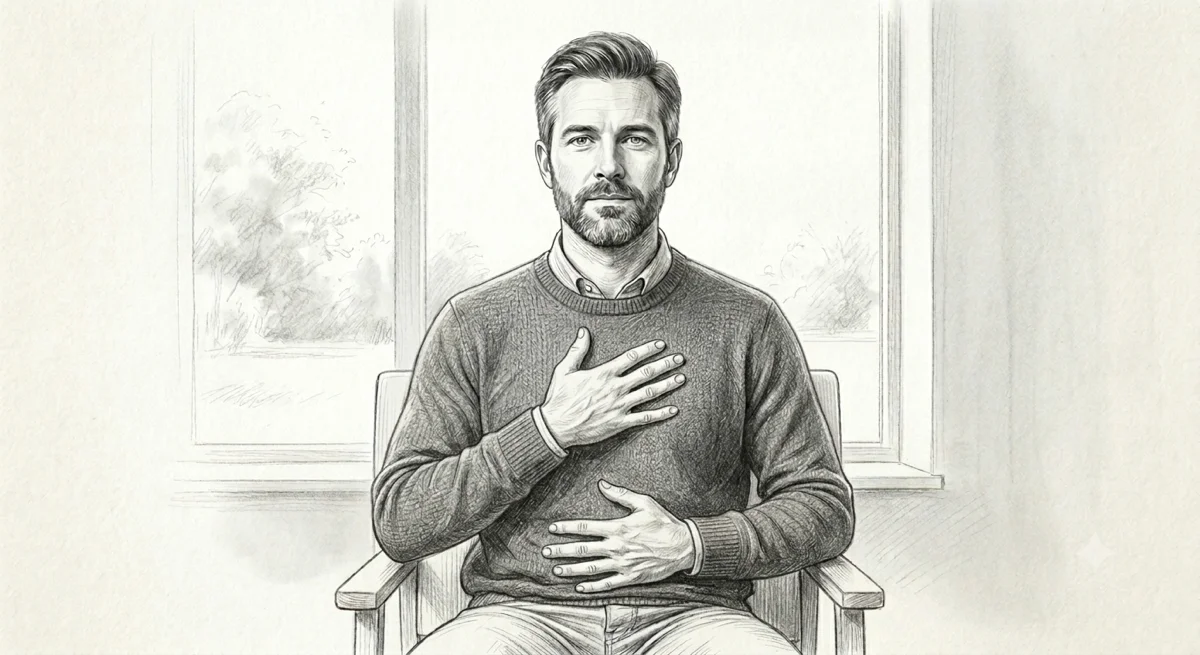
What the Course Covers
- What dysfunctional breathing actually is — and why it is more common than most people think. The recognised categories, how often it occurs, and the three pathways it tends to develop through.
- How breathing can influence neck, shoulder and back pain — the diaphragm’s dual role in breathing and trunk control, what happens when accessory muscles take over, and what the trials show.
- The nervous system connection — CO₂ tolerance, heart rate variability, and the panic‑breathing loop.
- The retraining protocol — diaphragmatic mechanics, nasal breathing and paced breathing, built into a routine you can sustain.
- The long game — why breathing rhythm matters well beyond relaxation, including its relationship with attention, sleep and the autonomic nervous system.
Who This Course Is For
People with persistent neck, shoulder or upper back symptoms that haven’t responded as expected to treatment directed at the painful area alone. Desk workers who notice their breathing sits high in the chest. Anyone who has been told to “breathe into your belly” without being shown what that actually means or why it might matter.
It is educational rather than diagnostic. If you have unexplained breathlessness, chest pain, or a known respiratory or cardiac condition, please speak with your GP before starting.
Enrol — It’s Free
Five modules, delivered through our online portal. Around 10–15 minutes each. Free, no card required, and yours to revisit whenever you like.
Please note: This course is for educational purposes only. Individual presentations vary — your assessment and management should be tailored specifically to you. If you have specific musculoskeletal or respiratory symptoms, please consult a registered health practitioner. Nothing in this course constitutes clinical advice for your individual situation.
Already a patient or have a question? (03) 9787 0600 · Book Online