Elbow assessment at Elevate Health Care covers the elbow itself, the grip and forearm that load it, and the shoulder and neck above — because tendon load at the elbow is determined further up the chain than most people expect. Conditions commonly assessed include tennis elbow, golfer's elbow and cubital tunnel syndrome. Treatment combines Fascial Manipulation by Stecco with graded tendon loading.
Tennis elbow, golfer's elbow, or something else?
Three presentations account for most elbow pain we see, and which side hurts separates them quickly.
- Outside of the elbow — worse gripping, lifting with the palm down, shaking hands or a backhand. This pattern points to tennis elbow. You don't need to play tennis; most people with it don't.
- Inside of the elbow — worse gripping with the palm up, wrist flexion, or twisting a screwdriver. This pattern points to golfer's elbow.
- Pins and needles into the little and ring fingers, often worse with the elbow bent — resting on an armrest, holding a phone, or overnight. This is a nerve pattern rather than a tendon one, and points to cubital tunnel syndrome.
The first two are tendon problems and are managed similarly. The third is not, which is why the distinction matters more than it might seem.
Should you have a cortisone injection?
It's the most common question we get about tennis elbow, and it deserves a straight answer rather than a position.
The best-known trial in this area compared corticosteroid injection against physiotherapy. At six weeks the injection group was clearly better. At twelve months they were clearly worse, with high recurrence — while the exercise group had continued to improve.
That doesn't make injection never appropriate. It can be a reasonable bridge when pain is severe enough to prevent the loading that actually rebuilds the tendon. But as a primary treatment the evidence favours graded loading — and knowing the shape of that trade-off is worth having before you decide.
→ The cortisone shot won at six weeks. Physiotherapy won at 52. — the full write-up, with references
→ The elbow, wrist and hand: why treating the site is rarely enough — the deep dive
What we assess
- The elbow — tendon tenderness, grip strength, and which movements provoke it
- The forearm and wrist — how you grip, and what your work or sport asks of it repeatedly
- The shoulder and neck — both refer into the elbow and change how the forearm is loaded
- Nerve involvement — where symptoms travel, and whether strength or sensation in the hand is affected
- The fascial system — densification through the forearm and upper limb, using Fascial Manipulation by Stecco
- Your load — work tasks, training, tools, mouse and keyboard setup, and what changed before it started
Elbow conditions we commonly assess and treat
Tennis Elbow (Lateral Epicondylalgia)
Outer-elbow pain that flares with gripping, lifting or a backhand — and the loading approach that addresses it.
Learn more →Golfer's Elbow (Medial Epicondylalgia)
Inner-elbow pain provoked by gripping palm-up, wrist flexion and forearm rotation.
Learn more →Cubital Tunnel Syndrome
Ulnar nerve compression at the elbow — pins and needles into the little and ring fingers.
Learn more →Related: wrist and hand
Wrist, thumb and hand problems have their own section — carpal tunnel syndrome, De Quervain's tenosynovitis, thumb base arthritis and trigger finger.
When elbow pain needs a different kind of assessment
Most elbow pain is tendon-related and load-driven. A few presentations need prompt medical assessment rather than ours.
Seek urgent medical care if elbow pain comes with:
- A hot, swollen, very painful joint with fever or feeling unwell — an infected joint needs same-day assessment
- Inability to straighten or bend the elbow after a fall or impact, or obvious deformity
- Progressive weakness or visible muscle wasting in the hand, particularly with numbness in the little and ring fingers — long-standing nerve compression needs prompt review
- Symptoms in both arms, or spreading into the neck and chest
- Fever, unexplained weight loss, or night pain that is unrelenting and unrelated to position
If you're unsure, call your GP or present to an emergency department. This page is general information, not advice about your situation.
Your first visit
A 60-minute initial consultation: history, physical assessment of the elbow, forearm, shoulder and neck, an explanation of what we've found, and treatment starting the same visit where appropriate.
No referral is required. If imaging is needed, we'll arrange it. If someone else is better placed to help, we'll say so.
Not ready to book? Start with the free program
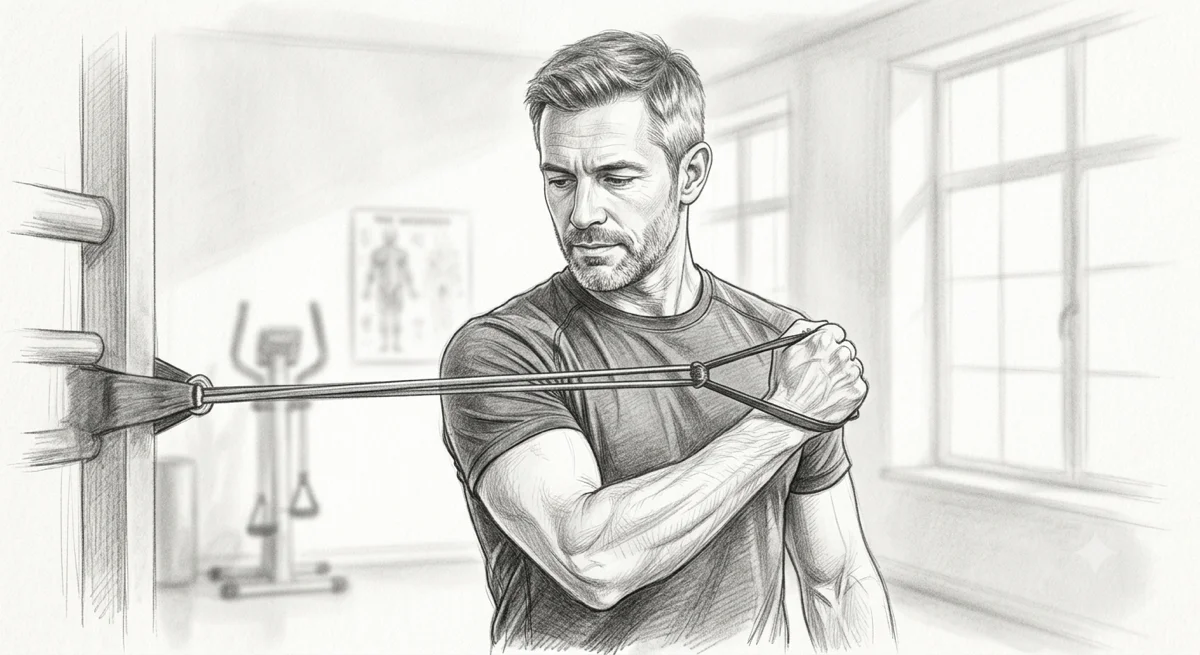
A structured two-week loading plan for tennis elbow — isometrics to settle it, then eccentric and isotonic loading to rebuild grip capacity, with the load-management rules that stop it flaring.
It's built around the outer elbow, so it isn't the right starting point for golfer's elbow or for nerve symptoms in the little and ring fingers. Use the patterns above to check which one you're dealing with first.
- What Lateral Epicondylalgia Is
- Load Management & What to Avoid
- Phase 1 — Isometric Loading (Days 1–7)
- Phase 2 — Progressive Loading (Days 7–14)
- Return to Gripping & the Long Game
Frequently Asked Questions
Please note: The information on this page describes our general clinical approach and is intended for educational purposes only. Individual presentations vary, and your assessment and management will be tailored specifically to you. Nothing on this page constitutes clinical advice for your individual situation. Please consult a registered health practitioner for advice about your specific condition.